
Skip to content
Avandra

AI Developers

Get more usable data, not just more data.

Imaging datasets purpose-built for the model you need to develop. Avandra selects de-identified imaging at the source against your model's requirements, links it to clinical context, and verifies quality before delivery, from a network of over 90 million studies across 100+ facilities.

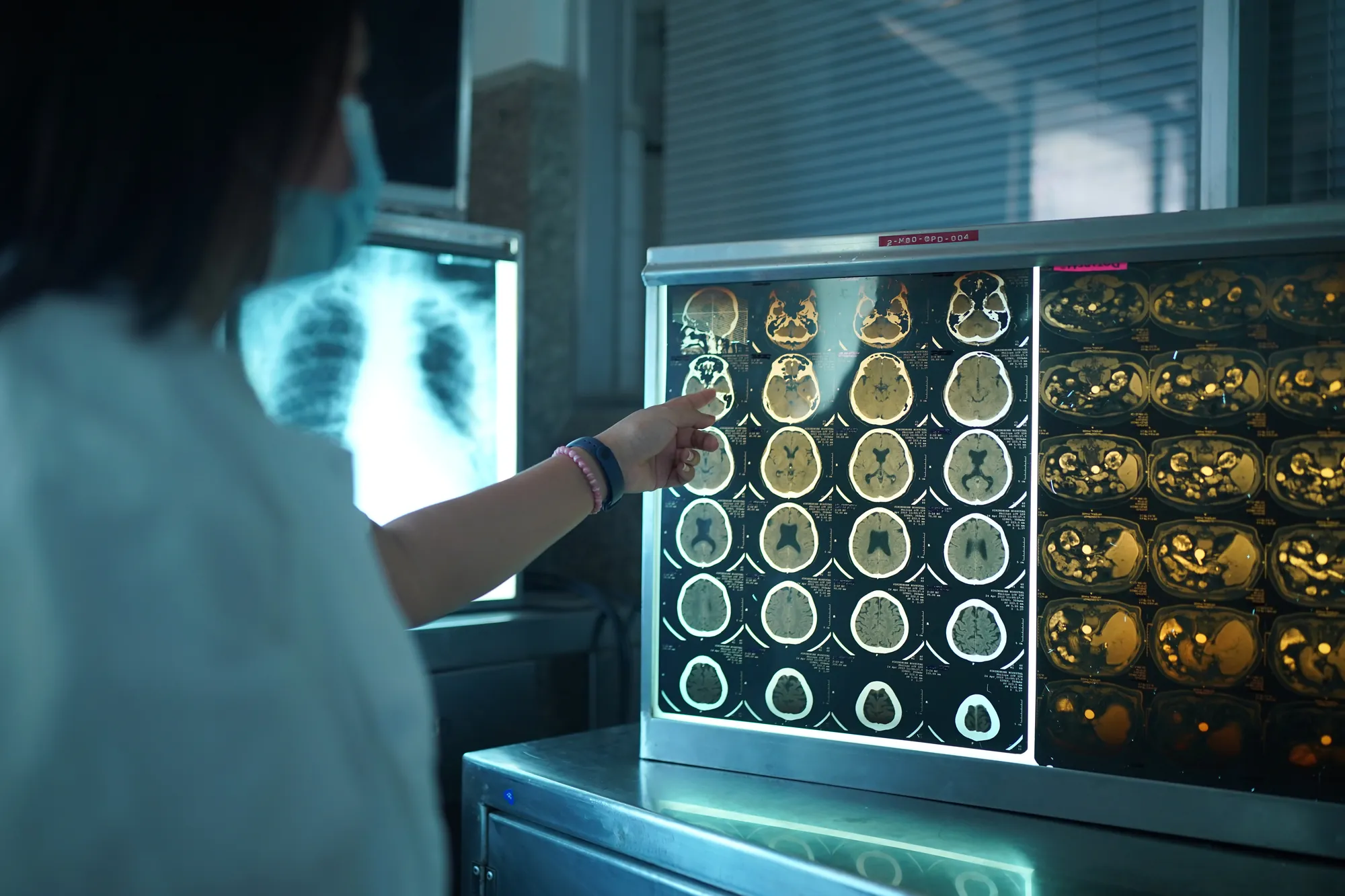
Researcher reviewing brain scans on a light panel in low light
imaging studies in the data network
90M+
imaging studies in the data network
facilities contributing to the data network
100+
facilities contributing to the data network
of longitudinal imaging depth per patient
7+ yrs
of longitudinal imaging depth per patient

Why Avandra

Usable data starts at the source

Volume alone does not make a dataset useful. Quality, source access, precise selection, and longitudinal context do.

Access at the source

Avandra connects directly to imaging archives at contributing facilities. That lets us query what data is actually available, inspect where each study came from, and curate data for a specific model, instead of reselling whatever was exported once.

Linked to clinical context

Imaging linked to diagnosis, treatment, and outcome context supports training and validation across disease progression and treatment, not only single time-point findings.

Fit for purpose

Your model requirements are translated into data criteria. Candidate studies are assessed against them, and quality is verified before anything is delivered.

Built for the full AI lifecycle

Avandra's imaging data can support the full model development lifecycle, including training, validation, and real-world performance evaluation.

Fit for purpose

From model requirements to verified data

Every dataset starts from what your model has to do, not from what happens to be in a catalog.

  1. 1

    Define requirements

    Use case, modality, anatomy, cohort size, and the clinical context the model needs.
  2. 2

    Translate to data criteria

    Requirements become concrete selection criteria for studies, reports, and linked context.
  3. 3

    Assess candidate data

    Studies at the source are checked against the criteria, including labels and acquisition details.
  4. 4

    Verify quality, then deliver

    Quality checks run before delivery, so problems are caught by us rather than by your team.

Case study

Harrison.ai: validating an imaging triage algorithm

Harrison.ai needed high-quality imaging to validate an AI triage algorithm that moves urgent cases up the radiologist worklist. Data from earlier vendors created specific problems:

  • Studies labeled as chest imaging came from other anatomical regions.
  • Pixel-level corruption surfaced only during manual review.
  • Too few positive cases that met both the clinical and technical criteria.
  • Removing bad cases after ingestion raised concerns about bias.

Avandra curated studies through its health system connections, with quality checks at ingestion, de-identification, and delivery. The data arrived correctly labeled and anatomically consistent.

“When we got data from Avandra, it was clean and complete.”

One customer's experience. Dataset quality is scoped and verified per engagement.

What makes a dataset useful

The criteria that separate a dataset that supports a production model from one that only supports a demo.

Criteria for evaluating an imaging dataset for AI development, and what Avandra provides for each
CriterionWhy it mattersWhat Avandra provides
Diversity across sites and scannersA model trained on one manufacturer's output degrades on another vendor's images.100+ contributing facilities spanning major scanner manufacturers.
Longitudinal depthProgression and treatment response only appear across repeated studies of the same patient.7+ yrs of longitudinal imaging depth per patient.
Linked clinical contextAn image without diagnosis, treatment, or outcome cannot be validated against a real endpoint.Studies linked to clinical context where available.
ProvenanceCompliance teams and regulators need to know where a study came from and what was done to it.Direct connection to source PACS and VNA, with de-identification method documented.
Delivery formatA format mismatch costs weeks of preprocessing.DICOM as acquired, NIfTI on request, with report text and cohort manifests.

Discuss your dataset requirements

Start with a brief inquiry

A few details are enough to begin. We will follow up to scope the full specification.

AI training data, answered

How many studies do you have, and across what modalities?
Over 90M+ imaging studies across 100+ facilities. The modality and scanner manufacturer mix is broken out on the Imaging Data page.
Do we need a full specification before we contact you?
No. A brief initial inquiry is enough to start: use case, modality, anatomy, rough cohort size, and the clinical context you need. Detailed scoping comes after.
Can we get a sample before committing to a full dataset?
Yes. Once the requirements are scoped, we can provide a de-identified sample for you to evaluate against your own criteria before any larger commitment.
What format is the data delivered in?
DICOM as acquired, with acquisition metadata preserved. NIfTI is available on request, along with report text and structured cohort manifests.
Is the data linked to outcomes?
Where available, yes. Studies can be linked to clinical context, including diagnosis, treatment, and outcomes, rather than delivered as images alone.
What does licensing look like?
Licensing terms, including what you may do with a model trained on the data, are set out in the data use agreement for your engagement.

Discuss your dataset requirements

Tell us the use case, modality, anatomy, cohort size, and clinical context. We will scope a dataset and a sample for you to evaluate.