
Medical Image Exchange: One Vendor, One Workflow
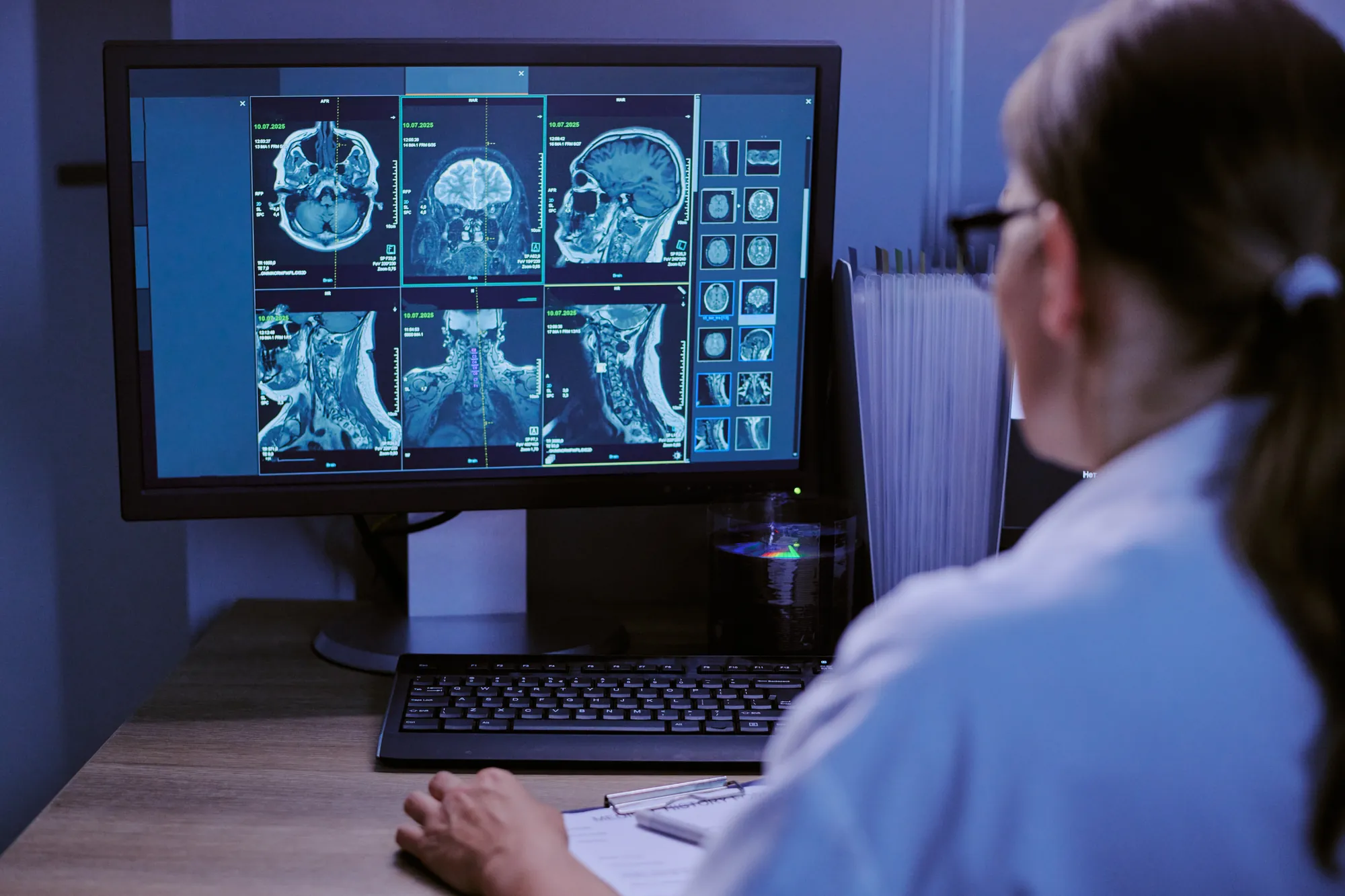
Medical image exchange is how imaging studies move between facilities, providers, and patients. Avandra covers all three paths an image can take, physical media, digital sharing, and direct site-to-site delivery, from one platform installed inside your environment. More than 2,000 hospitals use DatCard and Sorna technology today.
- hospitals using DatCard and Sorna technology
- 2,000+hospitals using DatCard and Sorna technology
- years of image exchange heritage (Sorna founded 1999, DatCard 2000)
- 25+years of image exchange heritage (Sorna founded 1999, DatCard 2000)
How images move
The three paths an image can take
Every imaging study that leaves your building takes one of these three routes. Most organizations need all three, and most buy them from three different vendors.
| Path | Speed | Cost driver | What IT has to do | How it fails | Best for |
|---|---|---|---|---|---|
| Physical media | Minutes to burn, then hand-carried or mailed | Consumables and staff time per disc | One workstation and a burner. No network change | Discs get lost, arrive unreadable, or have no viewer on a modern laptop | Patients leaving with their study, outside facilities that accept only media |
| Digital sharing | Immediate. The recipient opens a link | Per share, no cloud storage fees | Outbound connections only. No VPN, no recipient accounts | Recipient needs the emailed link and the separate access code | Patients, referring providers, second opinions, transfers |
| Direct site-to-site | Immediate and automatic | No per-transfer cost once configured | DICOM TLS between the two sites. No VPN to maintain | Both sites must be configured in advance | Standing referral relationships, affiliated facilities, reading groups |
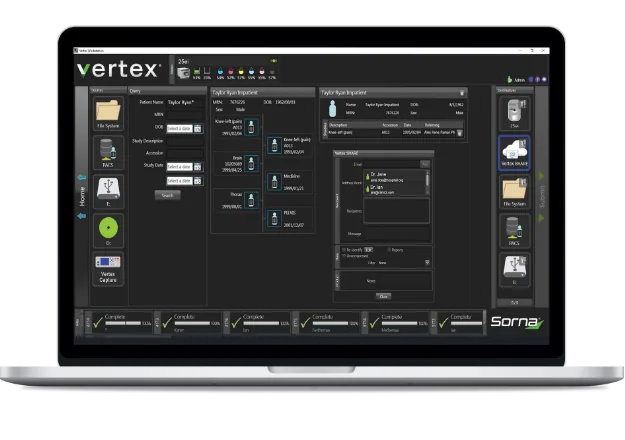
Avandra delivers all three from one platform and one contract. The physical and digital suites share a server, a login, and a single-screen workflow, so staff learn one application rather than three.
Physical and digital, licensed individually
Start where the need is. Add the rest later without a second server or a second vendor.
Physical Media Suite
DICOM CD, DVD, and USB production from six hardware configurations, plus import of outside discs, paper and film scanning, and export to local drives. Every disc ships with a viewer for Windows and Mac.
Explore the suiteDigital Exchange Suite
Vertex Share and Upload. Cloud-brokered delivery with no cloud storage: data streams from your facility on demand and is never parked with a third party.
Explore the suiteSits alongside any PACS or VNA
Avandra does not replace your archive. The Vertex server is installed on hardware inside your environment and talks to your PACS or VNA over standard DICOM, the same way any other node on the network does.
- ✓Standards-basedDICOM, HL7, and IHE conformance. Published conformance statements for Vertex, Reviewer, and eXpedo.
- ✓Zero-footprint clientClickOnce deployment, unlimited client licences, nothing to install per workstation.
- ✓Any source, any destinationPACS, VNA, modalities, scanners, film digitizers, cameras, and network drives in. Discs, USB, cloud share, secure DICOM, PACS, and VNA out.
- ✓Outbound onlyDigital exchange uses outbound connections, so no inbound firewall rules and no VPN per partner site.
One vendor replacing three
The cost of running three image sharing vendors is rarely on one line of the budget, which is why it goes unexamined for years.
One contract instead of three
Most organizations run one vendor for burning, another for sharing, and a third for import. Each has its own contract, renewal date, support number, and training.
One workflow at the desk
Staff query the source, combine the data, and send it to a disc, a link, a partner site, or back into PACS, from one screen, without switching applications.
One support path
When a disc fails to burn or a share does not arrive, there is one number to call and one team that owns the whole path.
And the archive you already store can pay for it.
The same on-premise install that moves your images can index and de-identify your archive so it contributes to AI development and life sciences research, under a revenue-sharing agreement. A radiology director evaluating image exchange is one click from the argument that their archive could fund the department.
The names your staff already use
PacsCube, Vertex, and Reviewer came to Avandra with DatCard and Sorna. They kept their names because your PACS administrators, film libraries, and referring providers know them by those names.
PacsCube
The DatCard workflow to receive, manage, and share imaging, on disc or digitally. In production since 2000.
View the productVertex
The Sorna platform behind CD production, import, scan, export, and digital sharing. One application replacing up to twelve.
View the productReviewer
The DICOM viewer line: Reviewer CD free on every disc, Reviewer MD for providers, Reviewer Admin for PACS teams.
View the productPacsCubefrom DatCard Systems, an Avandra companysince 2000
Vertex and Reviewerfrom Sorna Corporation, an Avandra companysince 19995 issued patents
In production across the majority of US academic medical centers
Including over half of National Cancer Institute designated sites.





















Medical image exchange, answered
The questions radiology directors, PACS administrators, and IT security reviewers ask before an assessment.
What is medical image exchange?
Does Avandra replace our PACS?
What does the install actually require from IT?
Is data stored in the cloud?
We are an existing Sorna or DatCard customer. Does anything change?
Can we keep discs and add digital sharing later, or the other way round?
Book an image exchange assessment
Thirty minutes with someone who has done this in 2,000+ hospitals. We will map how images move through your organization today, what each path costs you, and what consolidating onto one workflow would change.